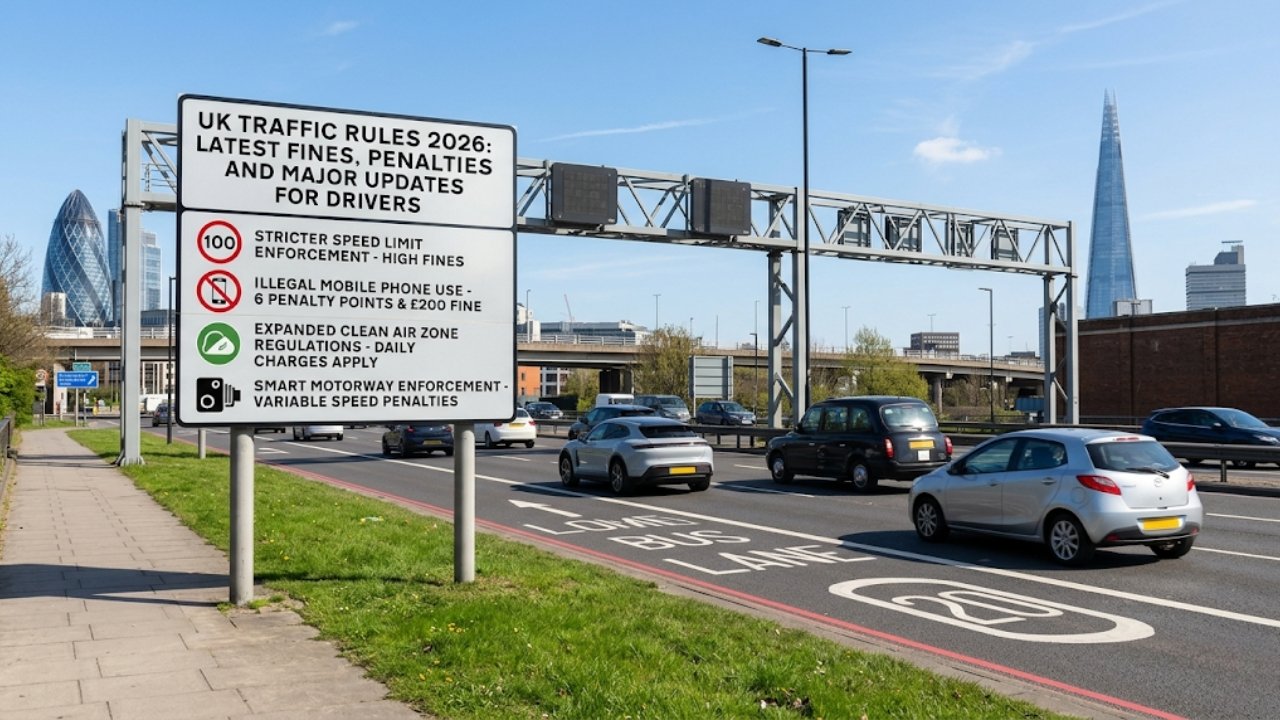
Not due to one headline-making act but a combination of focused actions in changed fines, penalties, and enforcement, driving in the UK is becoming stricter. By 2026, the agenda is on roads, cleaner city air and apprehending minor offences not as harshly as before. When you have a full UK licence or frequent cross the border into England, Wales, or Scotland, you could save unexpected points as well as surcharges and even be disqualified, so it will be important to understand these updates.
Seats and phones
Wearing of the seatbelts has never been optional. However, penalties are more severe in 2026. A driver found without a seatbelt shall get three penalty points and a fixed penalty fine. The fines may reach up into the hundreds of pounds in case the case is taken to court. The identical harsh rule is now imposed on the passengers, particularly on children. It is the driver to make sure that belts are well fitted.
There has also been tightening of use of mobile phones on wheels. The use of a handheld device is a five point offence. The automatic number-plate recognition, AI-operated cameras, and the daily enhanced coding of the Highway code imply that even the short-term looks can be traced. Repeat offenders receive higher fines, extended disqualifications and, in some instances, they are required to attend a driver-retraining course.
Alcohol, speed and insurance
There is increased aggression in the enforcement of drink-drive. Reduced tolerance is also being discussed and stricter limits have already been tested in pilot zones. The maximum penalties in the most serious drink-driving offences will include hefty fines, extended disqualifications as well as a prison sentence. 2026 proposals will envisage more stringent punishments on repeat culprits i.e. alcohol-locking devices on their cars.
Speeding is still widespread though sentencing bands and fixed-penalty notices have been altered. More frequent misdemeanors and the speed limit provoke larger penalties and penalties. Cases of uninsured driving are also charged more. Getting caught in a situation where valid cover is not in place may lead to six penalty points, a large fine and even immediate seizure of a vehicle. There is a stronger cooperation between the DVLA and the insurers and hence uninsured driving is more difficult to conceal.
Traffic jams, low-emission fees and electric cars.
The cost of driving in the urban areas has been on the increase due to the tightening of congestion control and low-emissions controls by the local authorities. Congestion Charge has been escalated in London. The cars with electricity are not exempt anymore. The people who enjoyed a free-ride are now required to pay the equivalent price of the traditional petrol and diesel vehicles on a daily basis. Other cities have similar surges of congestion style surcharges or low-emission, with shorter allowances and harsher punishments to non-payments.
Local government has employed automated number plate cameras and back-end systems as a tool that tracks those who have paid as well as those who have not. Late payment and fine notices can be accumulated very fast. Several uncharged bills should be discussed as a significant compliance problem and not a minor administrative cost. Motorists who commute to large cities are supposed to consider the payments as part of their car expenses budget.
Significant driving fines and penalties table in the UK.
| Offence (2026) | Typical points | Typical fixed‑penalty fine | Possible additional consequences |
|---|---|---|---|
| Driving while using a handheld phone | 6 points | £200 | Extended ban for repeat offences |
| Driving without insurance | 6 points | £300 | Vehicle seizure, court fine |
| Driving without seatbelt (driver) | 3 points | £100 | Up to £500 if prosecuted |
| Lower‑tier speeding (slight over limit) | 3 points | £100–£150 | Speed‑awareness course possible |
| Serious drink‑drive (high level) | 11+ points | Unlimited fine | Up to 14 years in prison, ban |
Serious drink drive (high level) 11+ points Fine Unlimited Fine Banned 10 to 14 years in prison.
NB: individual jurisdiction (England, Wales, Scotland, Northern Ireland) and circumstances may have a different number and points.
Amended regulations regarding the elderly drivers and number plates.
Older drivers, in particular the ones over 70 are receiving special attention. There are plans of stricter medical and vision examinations. The intention is not to penalize old motor drivers but to make sure that individuals who opt to drive are in sound medical conditions. Not reporting a medical condition that impairs motor ability to drive may result in fines and retrospective points penalty even in the event that no accident has been realised.
New innovation or so-called ghost number plates that may not be detected by cameras is also being cracked down on. Drivers who employ 3D-like, reflective, or infra-red elusive plates are subjected to huge fines. They have to instantly replace plates in most cases. Lawmakers claim that these plates corrupt the penalty effectively of the traffic-cameras and can be attributed to lawbreaking car parking, avoidance of tax, or uninsured vehicle driving.
The question of how to remain legal and not to get into trouble.
In order to remain to the right side of the 2026 rules, treat compliance not as a reaction, but as a routine. Check insurance expiry dates, renew MOTs and tax on time and arrive in congestion or in low-emission zones with definite payment scheme. Make calls hands-free or pull to the side of the road or somewhere safe to make and receive calls, which way a person is less likely to be tempted to use the phone when he or she is on a move.
Follow official instructions by GOV.UK and local authorities, but not rumors on social-media. New things are continually brought in at a slow rate. Knowing the precise wording such as when a new seatbelt penalty was introduced or how a certain band of technology congestion charges is imposed to a certain individual can translate a leisurely travel to an ordeal of receiving penalty notice.
FAQs
Q1: But what will happen in 2026 when I am caught used to a mobile phone whilst driving?
Out of court, you ordinarily face six penalty points and a fine worth 200 pounds, in addition to the price of a test-retest that is mandatory, in case you are a greenhorn. Recidivism may result in more fines and time bans.
Q2: Still no, in 2026, electric cars in the city are released of congestion charges?
The complete vehicle-emission exemption covering electric cars ceased in the central London and other localities and electric cars now pay the same fee as conventional vehicles, in the form of either the congestion or low-emission charge.
Q3: How do I know whether I have any outstanding penalty charges or fines?
Check outstanding fines or congestion-charge notices in your local authority via the online portal and GOV.UK Check if you have a Penalty Charge Notice service using the details of your vehicle registration.