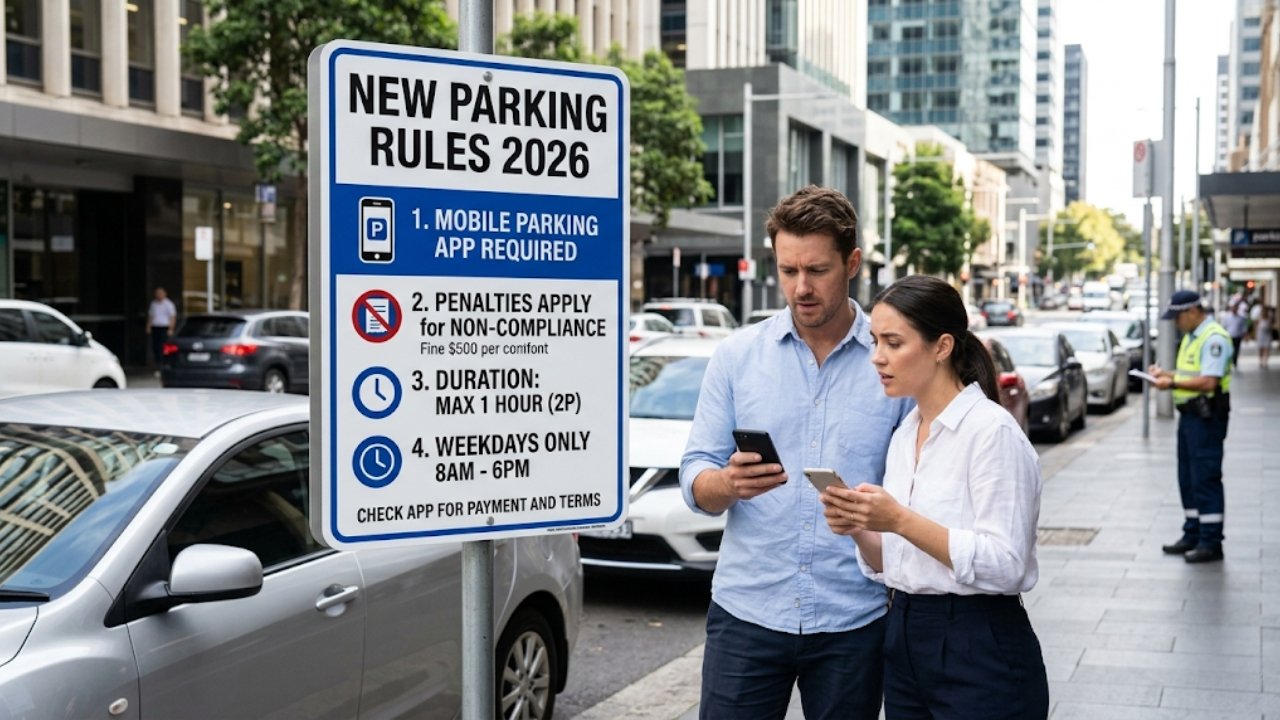
The parking regulations in Australia have evolved much in 2026. The state governments and local councils are increasing regulation measures in efforts to curb congestion, enhance safety, and safeguard the vulnerable road users. The reason of the changes was that people in the cities like Sydney, Melbourne and Brisbane have growing pressure of traffic; old regulations did not correspond to the modern arch-reality. Those drivers who continue to adhere to the old ways will be subjected to huge fines as high as more than 300 dollars at times. You should be aware of the key changes in order to remain in compliance, such as the increase in the amount of signage checks and enforcement by technology.
Key Changes Across States
Parking is governed by local councils and there were disparities to or fro by region, although with 2026 a new push was made to be more consistent nationally. Clear water zones that prevent access during peak times are now involved in more areas and have updated digital signs that can be updated in real-time by using apps. School zones are increasing no-parking areas up to 50m in busy areas to ensure the safety of children. In residential permit schemes, there is a more severe restriction of the total number of hours that visitors spend in a day to two hours in most suburbs, with enforcement verified with license-plate scanners.
The greatest level of scrutiny is that of disabled parking bays. A handicapped bay may be fined $500 or more in states like New South Wales and Victoria. EV parking, currently allocated in most metropolitan parking lots, has a fine of $250 when used by non-EVs. Parking of motor cycles must be restricted to use certain special racks; it should no longer be allowed to park by the sidewalks, as this will lower the risk of injured people on the road.
Breakdowns and Enforcement Trends Fine.
These cameras and AI license-recognition are now patrolling parking lots, where violating officers are detected without human surveillance. Dynamic pricing is used in urban areas; the price may increase 50 per cent during rush times and the bill could be paid using apps like EasyPark. There is also overstay at the loading zone, something that people did not pay much attention to before, and it now attracts a ticket of 330 due to conflicts between delivering traffic and the pedestrian movement.
The following table shows an overarching Google search 2026 fines averages by state:
| Violation Type | Typical Fine (AUD) | Key Locations Affected |
|---|---|---|
| Disabled Bay Misuse | $350–$500 | All urban areas |
| Clearway Breach | $250–$400 | Peak-hour streets |
| School Zone Parking | $200–$350 | Near schools |
| EV Spot Overstay | $200–$300 | Metro lots |
| Residential Permit Fail | $150–$250 | Suburbs |
| Bus/Loading Zone | $250–$330 | Commercial zones |
This information illustrates the fact that 1 mistake can cost you a lot. Always triple-check signage and applications prior to your departure.
Tips for Compliant Parking
Intelligent routines say everything. Take a snap of the closest parking sign, when you are there–good things change quick over the internet. View bay status and pay in real time on council apps Pay on council apps instantly in Sydney at Parking NSW and Melbourne at EasyPark flag restrictions. The customers should pre-order temporary permits online since walk-in has the tendency to cause a long queue.
Also organize local events and demystifying the street-cleaning days, which are now being carried out on a weekly basis and there is no excuse, vehicles will be subject to towing. Riders should only stop on noted racks; the chance of a fine of having parked on the sidewalk doubled this year. Electric cars have an advantage and that they have to charge; if not, non-chargers are not allowed in these overnight parking areas after 10 p.m. Change parking spots every hour in the busy places to avoid tickets.
Tech and Safety Moving the Shift.
Such regulations are a part of a bigger shift to smarter cities. AI monitors parking spaces 24/7 and reduces the number of rangers and detects 30% more infractions. The safety enhancements involve cyclists, as well as emergency responders; additional no-parking mandatory wedges are being placed at intersections. It is also more practical in terms of pedestrian movement since e-scooters use micro-parks.
The developers are providing motorcycle slots as per AS 2890- ten cars per slot when building a new development. Such a holistic strategy must minimize gridlock yet the drivers must remain vigilant. These may vary depending on your local council, so look on the details of it on your local council site; general guidance is nothing that should replace concrete rules.
Why These Rules Matter Now
The urban development of last year was seen to be on the highs ever, thus pushing parking to the extremes. Governments claim that accident rates have reduced with tighter regulations such as 20 per cent reduction in near-school accidents in pilot regions. The revenue of fines is spent on improvements of infrastructure, which can include broader bike lanes, and therefore a positive cycle is formed. Violation of the rules will lead to fines as well as congestion.
Implement the changes because they are informed by real-life data of the road users. Efficient parking is even more useful with the escalating fuel prices, which are affected partially due to changes in trade policies. Be educated, park considerately and have a more comfortable road.
FAQs
Q: Do fines vary by city?
A: Yes, but the disabled bay violations are always above $300 all over the country.
Q: How are the prices of dynamic parking paid?
A: EasyPark: Answer invitation to use apps like EasyPark to scan the QR devices on signs to get instant sessions.
Q: Are visitor permits free?
A: Can be free or subsidized to locals, in most places visitor prices range between 5-10 a day.