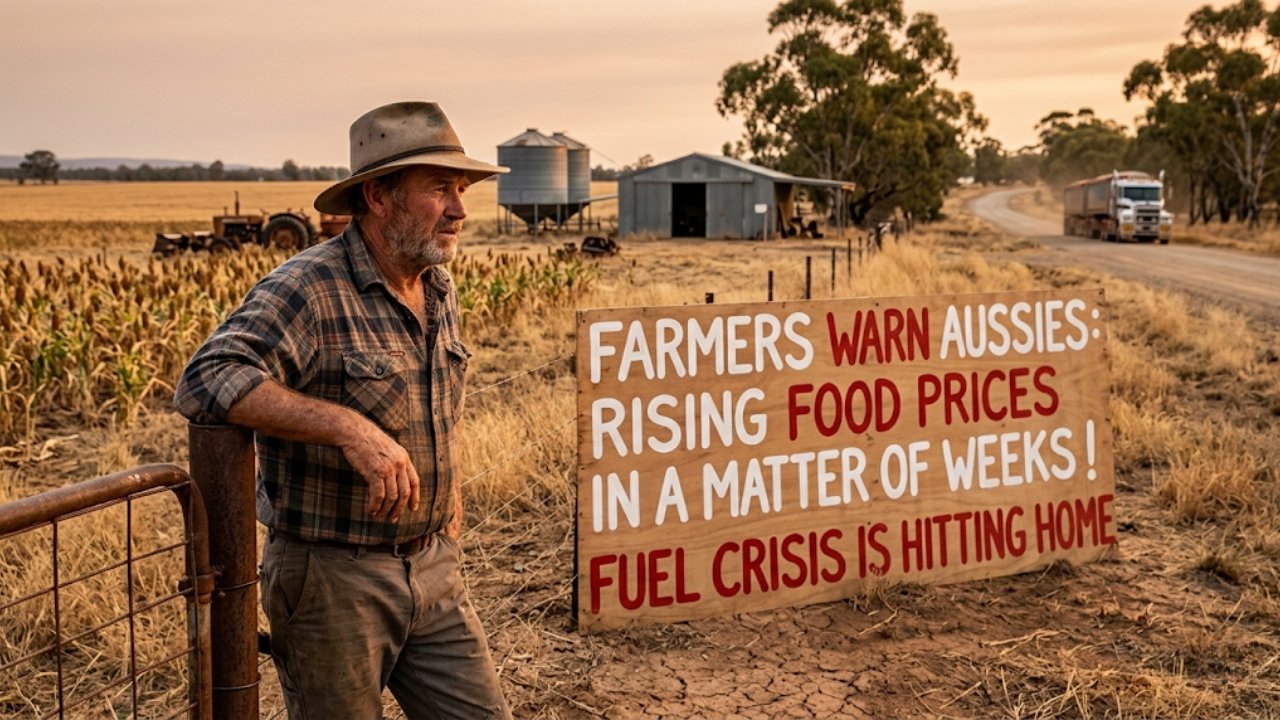
The farmers in Australia are raising red flags because a worsening fuel crisis threatens to push up grocery billing in the country. Prices of diesel have increased by 25 percent in the last one month alone partly due to the international supply disruptions and domestic refinery shutdowns. Rural producers threaten that even the daily products such as bread, milk, and vegetables would cost up to 10-20 percent higher in weeks. It is not a far off thing; it is a issue of weeks, according to Mick Harris, the president of the National Farmers Federation (NFF). According to Harris, with a thirty-year history of agribusiness logistics advisory, fuel comprises as much as 30 percent of farming operational expenses, such as tractors, transport trucks, and so on. Ripling effects of reduced marginalisation of refiners like the BP Brisbane refinery due to maintenance delays and geopolitical tensions are now squeezing the margins that were already washed by the 2010 droughts.
Why Fuel is the Lifeblood of Aussie Farms.
The fact that agriculture is greatly dependent on the use of machinery fueled by diesel such as machinery makes fuel the blood of Australian farms. Harvesting, irrigation pumps and tractors consume fuel to irrigate, feed and harvest crops that serve 26 9million Australians and export billions of crop. A single late harvest in whole of the MurrayDarling Basin on grounds of shortage of fuel would ruin a millions worth yields. An example of this is the story of veteran farmer Sarah Jenkins of New South Wales: when her local supplier ran short of fuel last week, she parked her fleet and wasted two days burning up her depot store to refill her fleet as well as incurring overtime expenses to recover. According to the data of the Australian Bureau of Agricultural and Resource Economics (ABARE), there has been a 5-15 percent historical average case of increase in the costs of food production that is associated with fuel volatility. FNFs will be left with hard decisions to make in the absence of affordable diesel, including making fewer trips to buy fertilizer or reducing the number of livestock feed deliveries.
The Transport Tangle Banging at Supermarket Shelves.
The farm gate is not a concluding stage of the crisis that exhibits a stuffy supply chain. Perishables such as outback orchards are transported in long-haul trucks to the markets in cities. As fuel costs reach 2.50 per litre in rural Victoria, trucking companies are raising prices by 1520 per cent. This is Queensland bananas or lamb of South Australia, which comes with padding price tags. Parallel trends have already been noted by retail analysts at Coles and Woolworths marking a potential adjustment to shelf prices in response to the fuel shock of 2022 when the price of avocadoes increased 18 percent. This will mean more expensive weekly purchases to the consumer in the metropolitan centers such as Sydney and Melbourne, say about a $20-30 dollars per family shopping. The Australian Competition and Consumer Commission (ACCC) data demonstrates the impact of these interruptions in increasing inflation; therefore, all shoppers should consider the reason exercising wisdom rather than panic buying in stocking non-perishables.
Key Impacts at a Glance
An example of the brewing storm is a snapshot of fuel prices washing over major categories of food, with estimates of ABARE and NFF surveyed farmers in March 2026:
| Food Category | Current Avg. Retail Price (per kg/L) | Projected Rise in 4 Weeks | Main Fuel Dependency |
|---|---|---|---|
| Wheat/Bread | $3.50 (loaf) | +12-18% | Harvest & milling transport |
| Dairy/Milk | $2.10 (1L) | +8-15% | Feed delivery & chilling trucks |
| Fruit/Veg | $4.20 (mixed basket) | +15-22% | Picking & cold-chain logistics |
| Meat/Beef | $18.50 | +10-16% | Livestock transport & abattoirs |
| Grains/Feed | $0.45 (per kg) | +20% | On-farm machinery & silos |
This is the reason why there is not even a single corner of the supermarket which is safe, it is rural fuel woes, which are an urban reality.
Play Moves and Farmer Fixes in Government.
Policymakers are not idlers. The federal government has expedited rebates on diesel use by primary producers of up to 150 milllion dollars and some of the states including Western Australia are opening strategic reserves to alleviate deficit situations. But farmers through NFF are agitating to have long-term solutions, including biofuel requirements amidst crop wastes to reduce use of diesel. Innovation In innovation respects, experiments in Tasmania with electric tractors have potential, reducing fuel consumption by 40 per cent on smaller farms. Practical interventions that serve everyday Australians comprise of purchasing locally and in season produce in order to reduce supply chains, consider buying farmers markets in place of imports, and encouraging apps such as Farmgate Direct to get offers in the paddock. These measures are the result of years of successive experience of climate and energy volatility and create resilience without expecting miraculous measures in the form of policy.
What the Future Holds on Aussie Wallets.
Experts estimate that the crunch may culminate by May unless the refineries will recover and this could result in the addition of about 5 to 10 billion dollars to the food inflation of the nations. However, there are good news points; there are plenty of 2025 harvests to cushion the supply of the rice and potatoes staples. With proven experience expressed through the voices of farmers and data-backed predictions, this caution is meant to have power on the consumers- plan ahead, plate diversification and push sustainable energy in farming. The fuel crisis has been a wake-up call, yet an irresistible demand and concerted effort, paddock to plate, will ensure the world-renowned food in Australia is affordable.
FAQs
Q: When will the price increases be felt in the supermarket?
A: Farmers put it at 2-4 weeks, and it would begin with perishable foods such as fruit and veg.
Q: Can I avoid higher costs?
A: Yes- shop local markets, purchase locally and now freeze extras.
Q: Is government aid enough?
A: It is a beginner with rebates, however, farmers demand an increase in biofuel investments.