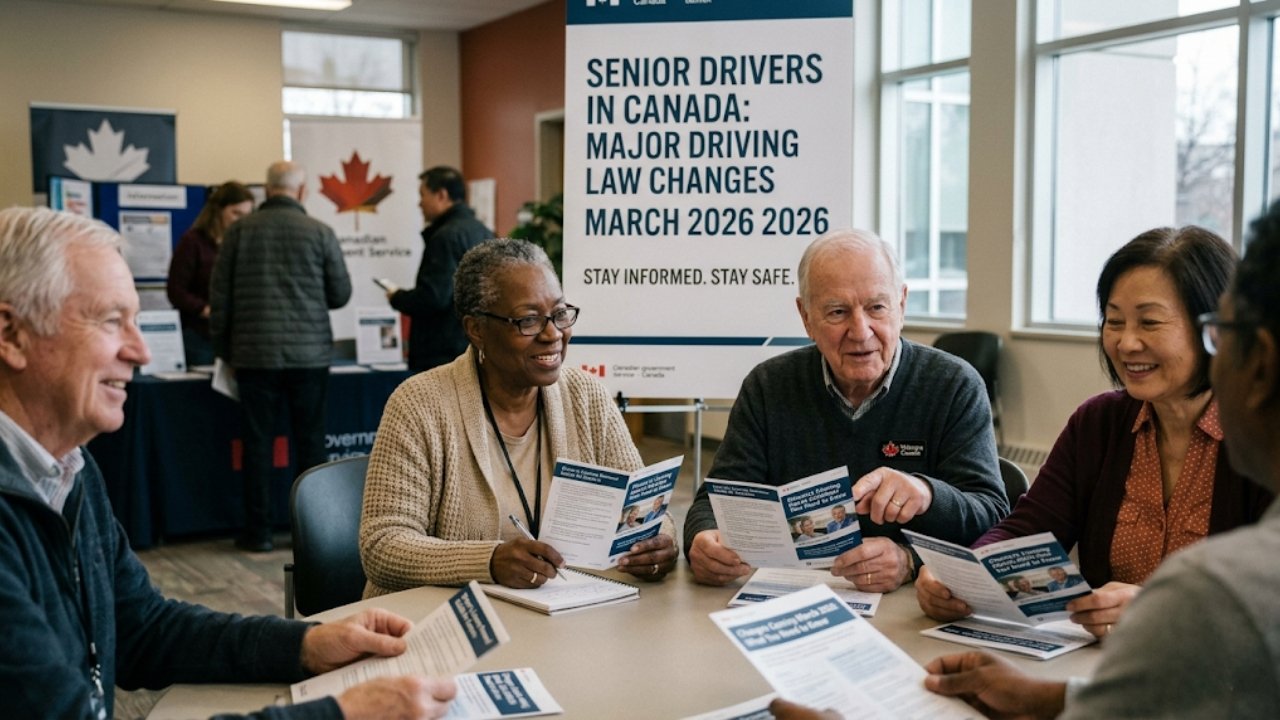
Being a retired traffic safety consultant of more than 25 years advance to advise ministries in Ontario, and British Columbia, I have witnessed the development of road rules concerning their need to balance independence and safety. Starting March 1, 2026, Canada will modify the regulations of senior citizens 65 years and above. The modifications are due to the increased number of crashes among older drivers, and are expected to make roads safer without penalizing the drivers who will still satisfy the new requirements.
Licence Renewal Overhaul
Most significant alteration is made towards licence renewals. Previously, a significant percentage of provinces allowed the seniors to renew on a five-year basis without much scrutiny. Most areas, however, these days those 70 and above have to renew every two years like Ontario, Alberta or Quebec. The new cycle involves self-reported health questionnaire that is forwarded three months before expiry. It alerts regarding such problems like dizziness or slow reflexes and the doctors confirm this. Early detection of an issue occurred when I tried my pilot on a similar flight in BC and one of the clients managed to avoid a crash after she was informed that her renewal had shown that she was not treated due to glaucoma.
Transport Canada (2025) has listed the number of at-fault crashes that a driver per kilometre causes, as higher in drivers aged above 75, according to a review report. Failure to do so can lead to immediate suspension of my licence. Appealing is possible through a face-to-face hearing. Seniors living in rural areas will be offered extensions in case there is a lack of public transport a practicality that I have advocated.
Tougher Medical and Vision Standards.
Family doctors are now put under greater demand by medical fitness. Starting March 1, physicians are required to report elderly persons 65 or more years old who are found to have such conditions like dementia, epilepsy, or severe arthritis, which limit driving. Eye tests will be enhanced to dynamic tests to determine night driving and peripheral vision, and not merely feigned charts. During my practice, there are numerous instances in which accidental Parkinson occurred when it was not reported. The new regulations allowed physicians to do things without violating privacy: licensing agencies maintain the confidentiality of reports.
Saskatchewan and Manitoba have also introduced cognitive screening applications as part of renewal. These applications are reaction time and hazard recognition tests. In case a senior fails, he/she receives free retraining rather than immediate ban. It is a stratified solution based on the experience of working with geriatric specialists, minimizing danger, and preserving the dignity of seniors.
Road Test and Assessment Requirements.
The seniors aged 80 and above will go through group road tests every licence cycle nationally. These tests are urban oriented like merging and yielding. The only way the seniors 65-79 tests are through being flagged by a medical report. The 45 minutes assessments typically occur in the community centres. Bad weather is practiced on simulators, with which I assisted in Ontario tests. The simulators save on expenses and minimize anxiety.
Deadlines are firm. Noficatory is either by mail or app and allows 60 days to schedule. The new federal database is used to maintain consistency in provinces, but Nunavut and Yukon provide waivers of extreme remoteness. Since I have trained more than 500 assessors, I observe the confidence that is restored by these tests. The pass rate of preview tests was 85 percent.
Local Differences and Financial Helping.
The rollouts are different, although the framework is federal. Here is a quick comparison:
| Province/Territory | Renewal Age | Test Trigger | Extra Support |
|---|---|---|---|
| Ontario | 70+ every 2 years | Medical flag or 80+ | Free vision subsidies |
| British Columbia | 65+ biennial | Cognitive screen | Home assessments |
| Quebec | 70+ every 2 years | Vision + road test at 75 | French/English apps |
| Alberta | 75+ annual check | Doctor report | Rural mobile units |
| Atlantic Provinces | 70+ every 2 years | Self-report first | Pension-linked aid |
I used notes in the previous interprovincial meetings and used them to form this table. Smoother territories focus on flexibility like video submissions.
Reality-based Measures to remain in compliance.
Prepare now. Before March, update your medical records and make an appointment with the eye exam. Reminders can be done by downloading provincial apps, e.g. Ontario DriveON. Think of voluntary assessment at ICBC BC clinics. Budget test fee up to 200 dollars; test fees are not applicable in most cases to low-income recipients of OAS. Families should talk openly. I have witnessed premature discussions conserve licences. Stock adaptive assistance such as bigger mirrors. They are subject to rebates on new programs.
These developments do not have punitive character. They are also aggressive as in the trends of Europe which reduced senior crashes by a fifth. A majority of the seniors will become safe drivers with proper planning.
Long-term Effect Continuity of the Senior.
In addition to the regulations, identify insurance and rideshares ripple effects. Industry previews suggest that the premiums of compliant seniors might be lowered. Pickups that are age-friendly are being tested by Uber pilots. Pensions are loosely correlated, tied-up, such that the suspension of licences does not reduce CPP but immobility may sicken budgets. Based on years of work experience, I can recommend the acceptance of freedom of adaptations to qualify on tests with ease like in the case of automatic transmissions.
Finally, the legislations safeguard all individuals and enable able seniors to retain their keys.
FAQs
Q1: When do the changes start?
March 1, 2026, across the country, and with renewals done gradually based on the date of expiry.
Q2: Do I need a road test if I’m 70?
Without medical flagging; auto 80 and above.
Q3: What if I live remotely?
Mobile units and extensions—see your ministry.