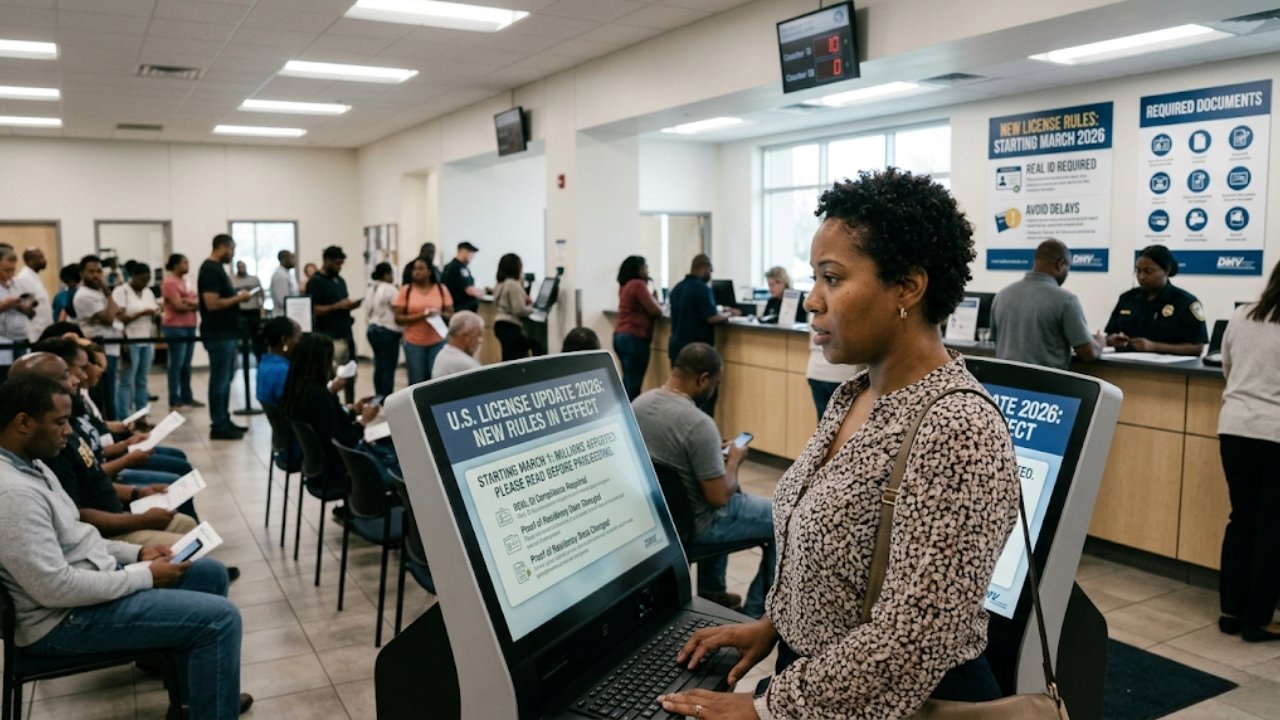
The U.S. gets ready to switch into full enforcement of REAL ID on March 23, 2026, and the number of American drivers who will need to switch to this new form of identification must be in the millions. These are not a simple bureaucratic adjustment, but the result of almost 20 years of stalling through the 2005 REAL ID Act. The law is aimed at enhancing the level of national security following the 9/11 attack, and it aims to prevent fraud and terrorism through tightening of the requirements of state-issued driver’s licenses and IDs. Beginning this month, you will require a domestic flight, admission to federal buildings or entrance to military bases with a card that is REAL ID-compliant i.e., bears a star at this bottom left corner. Not complying IDs will no longer be accepted.
It impacts some 140 million individuals who have outdated licenses that do not meet the required projections by the Department of Homeland Security. States have been desperate to modernize systems, and more than 50 per cent of licenses are nationally compliant. Nevertheless, the issue of procrastination has left a number of people scrambling. Imagine that your family decides to make a road-trip to a national park, only to be refused admission due to the absence of the golden star on the license of your dad. I have witnessed it during my several years following transportation policy, people, until lines in the airport clog, underestimate the hassle.
Why These Rules Matter Now
The existence of extensions just runs out when enforcement kicks in. The COVID-19 stated that the deadline between 2008 and 2025 is more than shifts forward, but there is no further leeway. The DHS cautions that after March mayhem might be similar to the Schengen visa constrictions in Europe where ill-equipped travelers would crowd the barriers. Some airlines such as Delta and United have already identified non-REAL ID holders at the check-in kiosks to inform passengers of the transition.
Outside of travel, ripple effects cause damage to routines. Cycle the military families who are based close to the bases or the federal workers who require access to courts. All companies that are dependent on federal contracts are required to authenticate employee IDs as well. Security analysts, among them the Transportation security administration, highlight the fact that REAL ID seals the loopholes- counterfeit IDs that drove up hijackings in 9/11. States filter out imposters by checking birth certificates, Social Security numbers and two proofs of address. This is not fearmongering: this is information-driven. In 15 ⠌ grasped cases audited by 2024, a report by GAO demonstrated that the weak standards have facilitated identity theft.
Critical Requirements and State Differences.
Obtaining REAL ID-compliant is not that fast as a visit to DMV. Most of the states have to use physical applications where original documents are not allowed. Lines to challenge tax season expected; some offices report waits 50 per cent longer since January. Paper trails prevalence dominates over digital options which are being introduced in more technology-advanced states such as California.
Prices are only slightly higher with the difference being between $10 to 30 upgrade charge being added to major renewals. The processing time takes between 4-6 weeks so do not wait when your license runs out. The following is an illustration of the compliance rates and fees of key states:
| State | Compliance Rate (2026) | Upgrade Fee | Processing Time |
|---|---|---|---|
| California | 65% | $35 | 4–6 weeks |
| Texas | 72% | $25 | 3–5 weeks |
| Florida | 58% | $28 | 5–7 weeks |
| New York | 55% | $30 | 4–8 weeks |
| Illinois | 68% | $20 | 3–6 weeks |
The differences highlighted in this table are that the Southern states are ahead and the Northeast lagging states are stuck in a bottleneck. FYI: Be sure to verify with details of your DMV site in your state; Arizona requires utility bills within 60 days of your application, unlike Washington that is open to affidavits.
Difficulties and the Way to cope With Them.
It does not work out for all. Immigrants, new arrivals and victims of name change usually encounter document snags. Transgenders complain of additional suspicion on gender identifiers that do not fit their gender, which led to advocacy by other groups on appropriate guidance such as the ACLU. Rural clients have to drive over many hours to DMVs that lack staff, which adds inequities to the situation.
Workarounds exist. Passports are alternatives to REAL ID when flying- no star required. In the border states such as Michigan, user Enhanced Driver’s Licenses (EDLs) have dual-purpose compliance. This spring, mobile DMV units are rolled out in 20 states and will calm travel woes. Get the jump, renew early, lo! most states permit it at least one year earlier. Monitor your position using applications such as myDMV in Virginia which sends compliance warnings.
Economically, poor people are eligibles to waive of fees in such locations as Oregon. Document clinics Community centers partner with nonprofits to help 500,000+. My tips, which I have sharpened on advising the forums of policy: Get documents together. Digital scan of the backups, bring the originals. Waiting is rewarded in the hysteria.
Preparing for the Long Haul
By the month of March, look forward to teething pains – website crashes, temporary waivers in extreme cases. Airlines promise avoidance of grace periods over summer, although are not to be counted on. Digital IDs may be the future of REAL ID, in the long run; Georgia pilots are inspecting a pilot of app-based ID verification, reducing plastic requirements.
This update makes security even stronger without discontinuing the lives upon doing it proactively. States that spend on outreach such as the multilingual campaigns in Texas are the exemplars. Feeds and dashboards on dhs.gov/real-id. Millions affected? Yes–but with knowledge you will have your way.
FAQs
Q1: What will happen in case I can not meet the March deadline?
There are non-conformant IDs that are used to drive and vote among other things, but not federal access. Get a passport as an insurance.
Q2: How much does REAL ID cost?
Generally, this ranges between $10 and 35 in addition to normal renewal charges depending on the state.
Q3: Can I get REAL ID online?
It is provided by limited states; the majority of them demand face-to-face visits with physical documents.